Local Montauk Whale Watching 2026
Our 31st year with Viking Fleet of Montauk, NY
By: A. H. Kopelman, Ph.D.
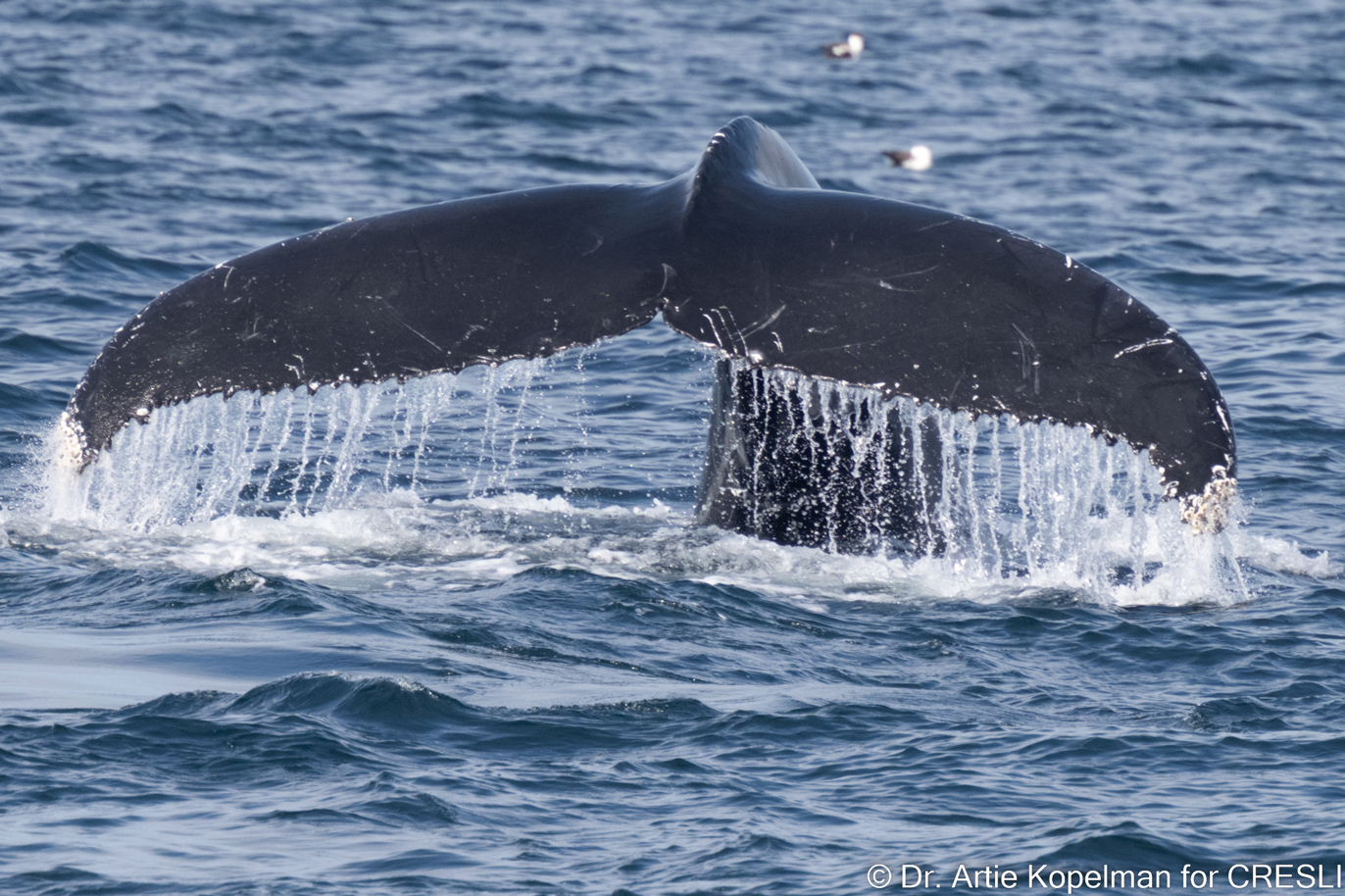
The Viking Fleet and CRESLI 2026 Whale Watching Season is over!
Below are the reports for all 51 2026 trips
CRESLI and the Viking Fleet ran scheduled trips from late May through October (see our calendar or below).
We offer special family friendly marine cruises focusing on the sights of the ocean! Enjoy a day on the water with your family looking for whales, dolphins, sea turtles, sea birds and sunfish. Along the way you can view the Montauk lighthouse and all the landmarks of the east end.
The Viking Fleet and CRESLI are proud participants in the National Oceanographic and Atmospheric Administration’s Whale SENSE program. This voluntary program ensures that participating whale watch companies comply with NOAA Fisheries Greater Atlantic whale watching guidelines to prevent harassment of marine mammals. This includes slowing down, managing our time near whales and dolphins, and alerting NOAA of any entangled, ship struck, injured or diseased whales encountered. We are thrilled to be Whale SENSE’s 50th partner and promoting responsible whale watching and stewardship of the marine environment.
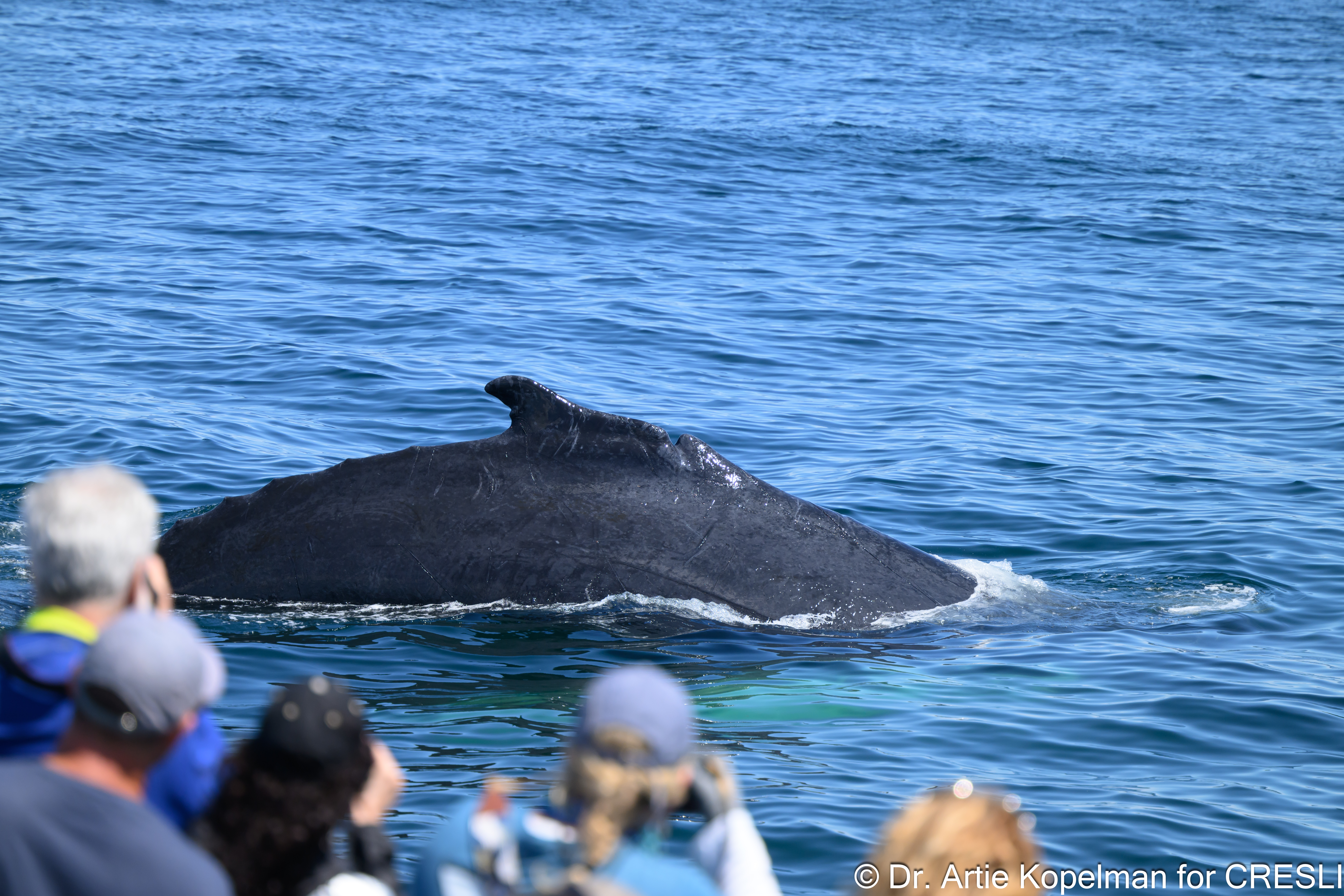
We are the only crew with over 40 years of whale watching and research experience, as well as professors/scientists as trip leaders (naturalists). Join us and come away with great memories, great photos and videos, and an education about whales, dolphins, sea turtles, and marine life that is second-to-none.
- Meet the CRESLI naturalists/educators who will narrate the tour and answer your questions!
The Viking Fleet vessels are equipped with clean restrooms, comfortable seating and galleys onboard. We recommend reservations. You can either do so by phone (631-668-5700) or via the link below
tickets: https://vikingfleet.com/whale-watching-cruises. In 2026, The regular fare for these trips is $100 for adults, $55 for children 5-12y/o, FREE for Children 4 and under
A LIMITED NUMBER OF DISCOUNTED WHALE WATCHING TICKETS WILL BECOME AVAILABLE FOR VARIOUS SUFFOLK AND NASSAU COUNTY LIBRARY PATRONS (POSSIBLE $25 fare reduction per person, with restrictions)
- Contact your local library's Adult Services for a promo code
- Promotion is limited to 25 reduced tickets per date and subject to availability.
- Scroll to the bottom of this page and look at RELATED DOCUMENTS
Our colleagues at the Viking Fleet supports CRESLI's work through in-kind donations of providing the vessel and vessel crew, and some funds per trip. We are eternally grateful to the Viking Fleet for our decades of collaboration.
Look here to check the Marine Forecast for the waters around Montauk
YOU CAN HELP SUPPORT CRESLI when you view and purchase images/prints/artwork
2026 Whale Watch Trips (click on the highlighted links for reports)
|
Fog, fog, and more fog
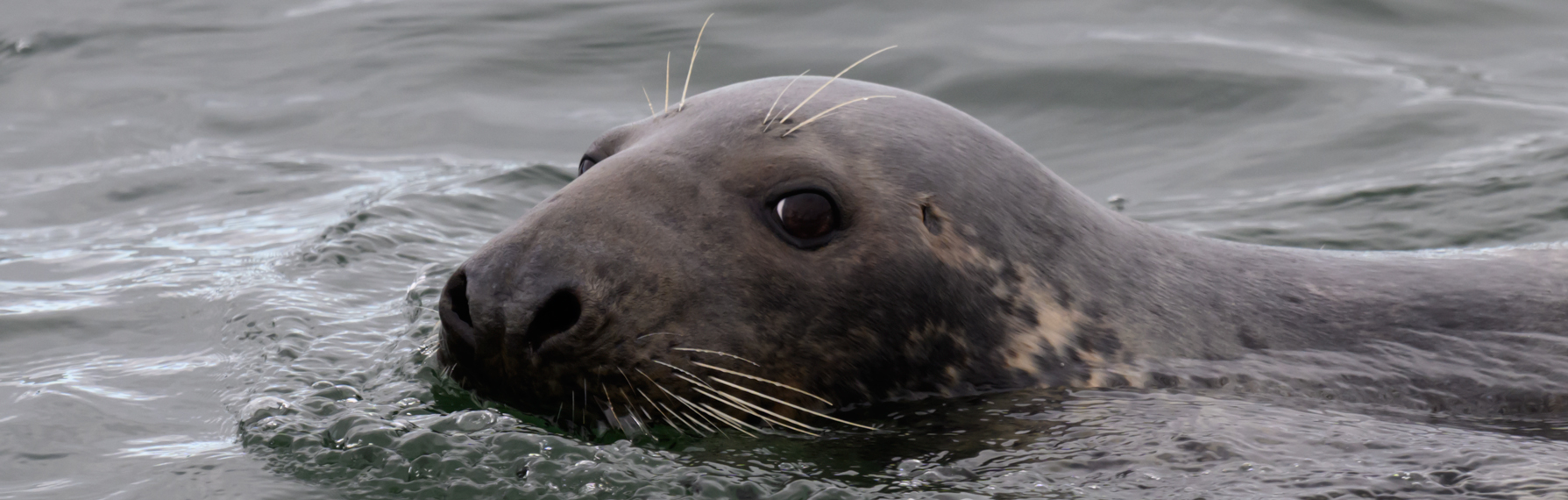
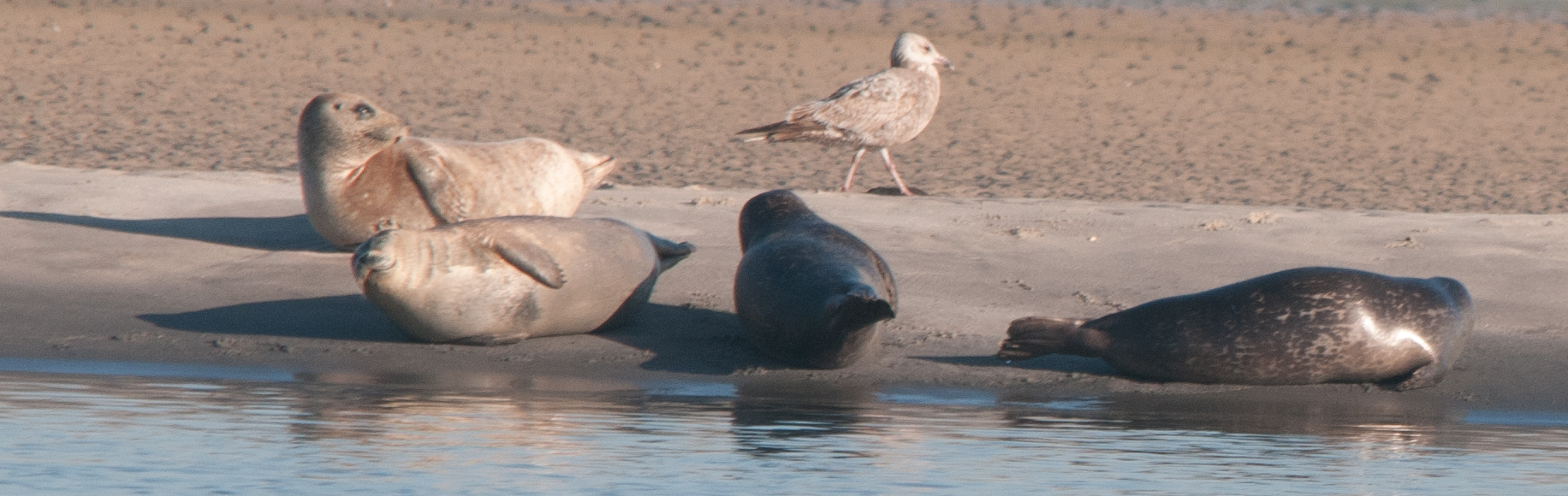
It was super foggy start to our 31st season. While conditions north and west of the Montauk Lighthouse were excellent with 6 miles of visibility, as we headed west a bit offshore, we entered the fog. Visibility dropped to 440 yards (1/4 mile) and continued to drop to about 150 yards and would vary between these values as we headed west towards Napeague, where the SST (sea surface temperature) was 52.05 oF. We headed out to deeper water in Block Channel, but the fog remained and the SST rose to a whopping 53.74 oF. More fog and slight clearings continued wherever we went. We were able to see 2 Great shearwaters (Ardenna gravis) and 8 Sooty shearwaters (Ardenna grisea), as well as 1 Wilson's storm petrel (Oceanites oceanicus). A few folks had a brief view of an Ocean sunfish (Mola mola). Just before pulling into the dock, one of the resident Atlantic gray seals (Halichoerus grypus atlantica) popped up.
Totals:
|
|
Our first humpback of the season!
For our second trip of the season, we sailed along the shoreline following an abundance of prey (bait) in the region in the hopes that cetaceans (whales and dolphins) might be found feeding there. On this last day of May, the wind and chill of spring were still present, but as we braved the cold, we were awarded with various sightings of numerous terns, immature northern gannets, common loons, Wilson’s storm petrels, and at least one shearwater. We decided to turn south and head to an area farther from shore to search. Along the whale, a sharp-eyed volunteer observed a single fin in the water which we quickly investigated. As expected, that fin belonged to an ocean sunfish, Mola mola, resting and warming itself at the surface after likely feeding at depth. We were able to spend some time alongside this wildly unique fish affording passengers excellent views. We moved on to continue our search and found two blows in the distance belonging to a small humpback whale, our first of the season! This whale spent a few minutes at a time beneath the surface moving large distances between blows. As we were waiting, the young whale surprised us all by surfacing directly next to the vessel to the delight of those onboard. Even those on the opposite side of the boat could clearly hear the loud exhalation of the blow, and we were able to capture photos of its dorsal fin in the hopes that we might be able to match this individual to others in our humpback whale catalog or to others in the region. CRESLI photo-identifies humpback whales and has documented 272 unique individuals since 2009 aboard Viking whale watches. Documenting individuals helps scientists understand how long and how often humpbacks occur in the waters off Montauk. This individual also adds to our understanding of habitat usage by humpbacks contributing to 34 years of sightings data in the eastern New York Bight. The season is young and we are just getting started – book your trip with us today!
Photos to view and/or purchase to help support our work - prints, digital copies, and framed artwork available |
|
We found them!! Dolphins, pelagic birds, and finback whales!!
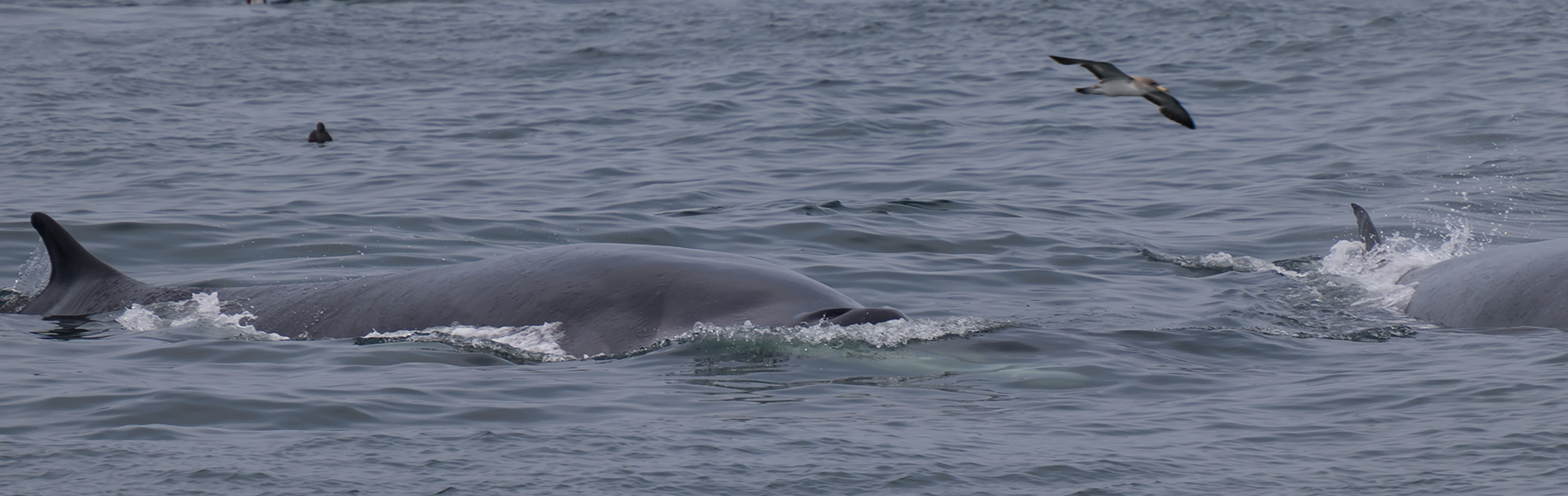
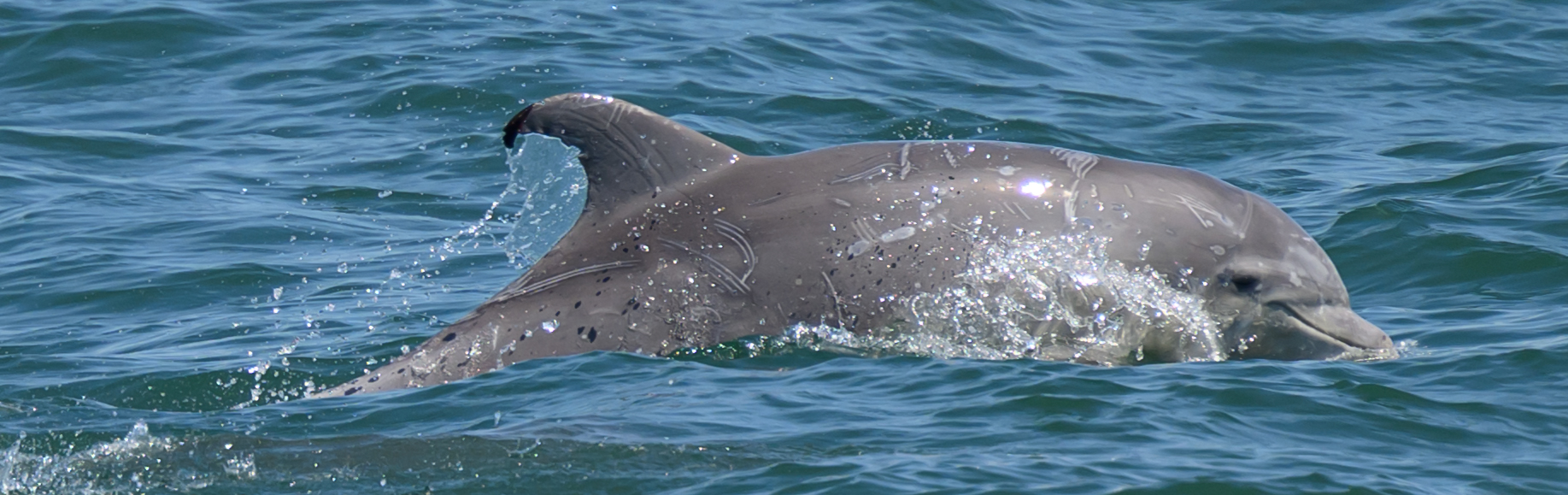
On a day with good visibility, comfortable and sometimes cold conditions, we were successful finding a several aggregations of Tamanend's bottlenose dolphins (Tursiops erebennus) in the near shore waters just south of Montauk Point. After encountering ~150-200 Tamanend's bottlenose dolphins, We decided to search further east where we encountered several ocean sunfish (Mola mola) and many Lion's mane jellyfish (Cyanea capillata). Just about everywhere we went, we saw pelagic birds including 25 Wilson's storm petrels (Oceanites oceanicus);135 Sooty shearwaters (Ardenna grisea), 36 Great shearwaters (Ardenna gravis), 2 Manx shearwaters (Puffinus puffinus), 2 Cory's shearwaters (Calonectris borealis). On our way back, we saw a massive conical blow going 20' into the air - a finback whale (Balaenoptera physalus), the whale was about 1 mile away and blew 4 times before diving. We carefully got to the area and the whale eventually surfaced 1/4 mile away, which is typical fin whale behavior. While searching for this massive fine whale we found a smaller fin whale nearby and was able to capture photos of its dorsal fin and left side. Unfortunately we had to leave shortly thereafter. We can't wait to get back out. Our thanks to CRESLI volunteers, and the Viking Fleet crew. Join us (https://cresli.org/whalewatching)!
Photos to view and/or purchase to help support our work - prints, digital copies, and framed artwork available |
|
Dolphins nearshore and surrounded by whales offshore! 4 species of cetaceans!!
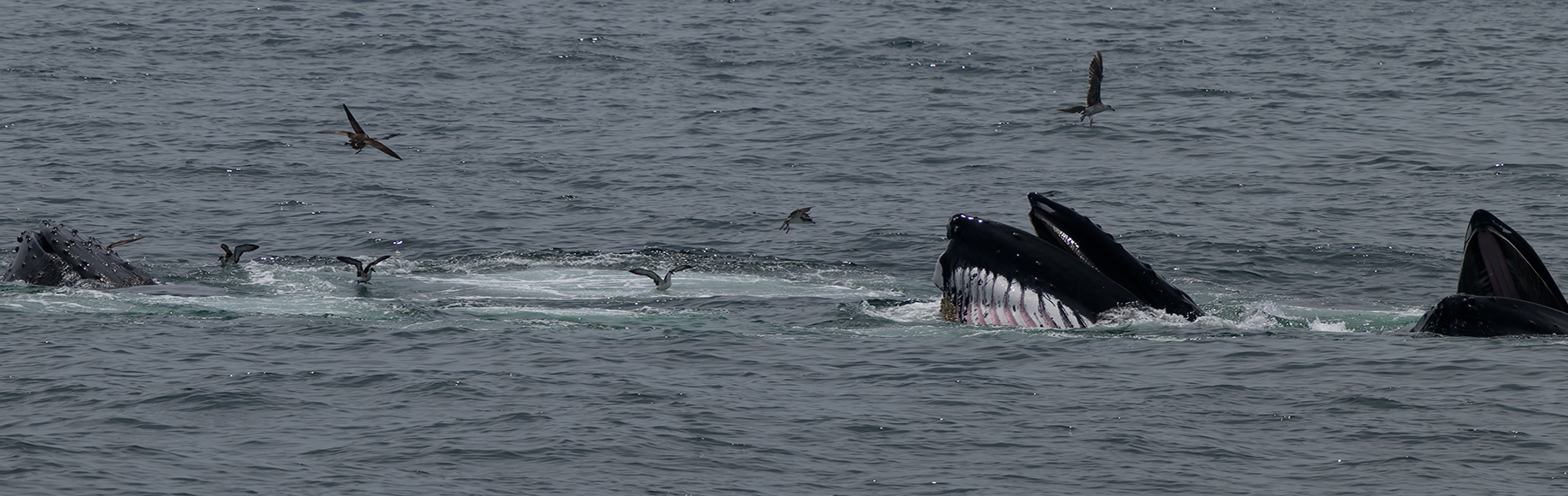
15 minutes after leaving Montauk Harbor and heading east we found our first cetaceans, a small group of 6-8 Tamanend’s bottlenose dolphins. It got better and better! We find our 1st finback whale an hour later, just a few miles from shore. We had reports of whales offshore and we headed out. Offshore a few hours later we find a motherload of whales – finbacks, minkes , and humpbacks. We were officially surrounded by whales for the next few hours. Ultimately, we encountered approximately 10-12 finback whales, 3-5 minke whales, 2 humpback whales (one known from the coast of Virginia and one yet to be identified). The humpbacks were each bubble-ring/open mouth feeding on sand eels. The entire water column was filled with sand eels from the surface to the sea floor at 147 feet. It doesn’t get much better than that! All appropriate protocols were followed and no cetaceans were disturbed. Our thanks to the Viking Fleet crew and the CRESLI crew.
Photos to view and/or purchase to help support our work - prints, digital copies, and framed artwork available |
|
Another astonishing trip with 5 species of cetaceans, a leatherback sea turtle, ocean sunfish, and a plethora of pelagic birds
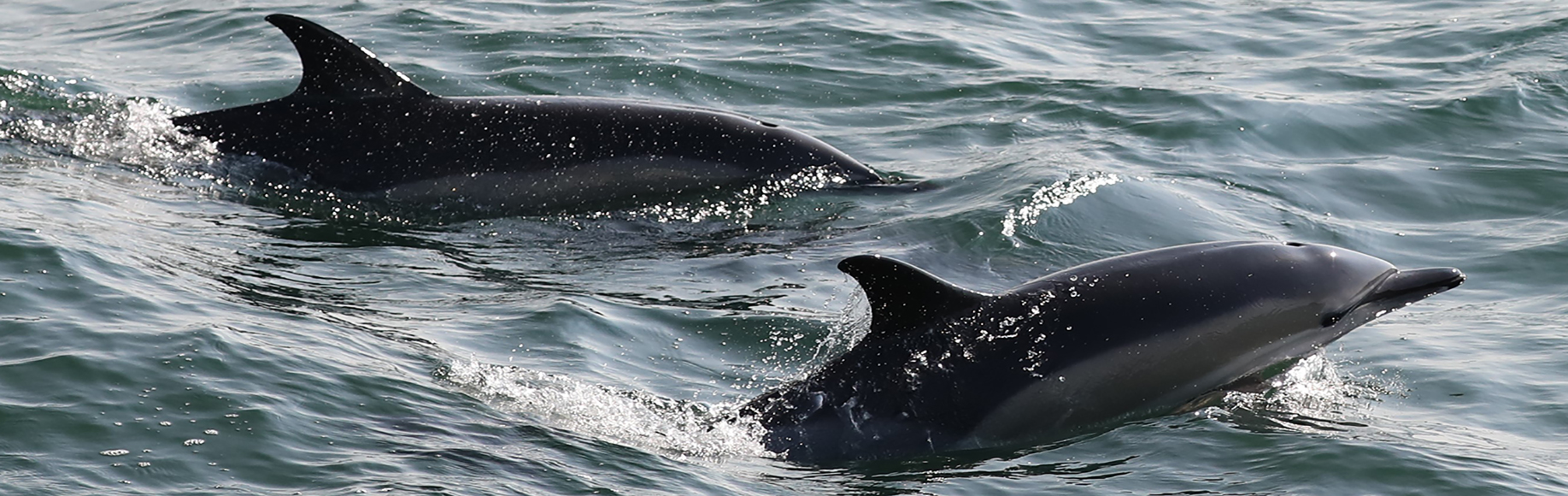
We started our trip in slight haze that burned off as we progressed. We has reports of whales to our south and off we went. We found our 1st pelagic birds as well as finback whale and Tamanend's bottlenose dolphins(Tursiops erebennus) within a few miles of Montauk Light. As we headed further S, we continued to find pelagic birds, and whales. Finbacks (Balaenoptera physalus) in every direction including what appeared to be mom/calf pairs, squid (Illex spp.) were everywhere and the finbacks were feasting. Most shearwaters (Great, Sooty, Cory's) were so full that they could barely take off. We were often surrounded by whales in every direction, minkes (Balaenoptera acutorostrata) and finbacks mostly, but we did find 2 pairs of humpback whales (Megaptera novaeangliae) that we were able to observe and attempt to ID. Again, we are of the mind that we had mom/calf pairs. Eventually along came an aggregation of 200 short-beaked common dolphins (Delphinus delphis) that decide to ride along our bow wake and vocalize, surprising the passengers on the lower deck. We also observed a massive upwelling of sand eels (sand lance) (Ammodytes spp.) Just as we were ready to turn northward, a leatherback turtle (Dermochelys coriacea) and an ocean sunfish (Mola mola) were sighted.Our thanks to the Viking Fleet crew and the CRESLI crew.
Photos to view and/or purchase to help support our work - prints, digital copies, and framed artwork availabl |
|
Another trip with 5 species of cetaceans!
With temperatures on land reaching the mid to upper 90s, a trip on the water amidst cool breezes and beautiful seas would have been enough. Then came the dolphins; three small groups of Tamanend’s bottlenose numbering approximately 40-60 individuals before we even passed the lighthouse. Then, on our way to the feeding grounds, we encountered scores of short-beaked common dolphins moving towards and around our vessel to the sheer delight of all onboard. But that was just the appetizer. Blows were spotted in the distance and we investigated. Those blows belonged to an unbelievable number of endangered finback whales; at least 8 confirmed at one time with more likely beneath the surface. Seeing a fin whale is a treat on any day, but seeing this many as they fed on the abundant bait (visible as dark shoals near the surface of the water) was extraordinary. Then, more blows farther away led us to at least 9-12 additional finback whales. Phenomenal! Dozens and dozens of sooty, Cory’s, and great shearwaters along with Wilson’s storm petrels flew nearby and rested on the water. Then, a minke whale appeared and stayed next to vessel, affording rare and incredible views of an otherwise elusive species. But then, dark figures broke the surface of the water ahead of us, belonging to ten (possibly more) humpback whales bubble cloud- and open mouth- feeding, likely on sand eels. Fin whales, common dolphins, and minke continued to make appearances around the vessel as the sounds of blows and sights of four different cetacean species filled our hearts and senses. Our season is just beginning and we are off to a hot start! We sail every Monday, Wednesday, Friday, and Sunday; grab your friends and book a trip with us today.
*bird count estimates are conservative and based on those identified at time of encounter; there were many more in the area
Photos to view and/or purchase to help support our work - prints, digital copies, and framed artwork available |
|
MTK Whale Watching is HOT!
The heat wave on land may be finally breaking, but Montauk whale watching is ON FIRE right now! We started our trip with a surprise appearance by an adult gray seal swimming next to the boat as we were transiting out of the harbor. We headed south toward the feeding grounds where so many whales and dolphins were encountered on Friday’s trip. Along the way, we found sporadic small pods of Tamanend’s bottlenose dolphins, which we paused to enjoy, before traveling on. Eventually, blows in a variety of directions were observed and we found ourselves in the company of a finback whale, one of over a dozen in the area. Humpback whales broke the surface as they kicked- and open mouth- fed on the abundant bait in the water column. The enormity of the event was evidenced by pods of charging common dolphins swimming alongside the fin and humpback whales, and frequently approaching our vessel affording passengers excellent views. Here and there, a minke whale would appear in the mix of the other cetaceans. It was hard knowing where to look as the whales and dolphins (and all the excitement) surrounded the Viking Starship. It was a privilege to experience these animals on such an enormous scale. And birders onboard delighted in the array of pelagic species along with four south polar skuas also documented. Let us take you out on our next adventure – you do not want to miss this!
*bird counts are conservative estimates based on confirmed sightings by naturalist only
Photos to view and/or purchase to help support our work - prints, digital copies, and framed artwork available |
|
The Stuff That Dreams Are Made Of!
Just when we thought we couldn’t top our last few trips, yesterday’s whale watch showed us otherwise! We headed out on what could only be described as a perfect summer day; high 70s, light breeze, unlimited visibility, and not a cloud in the sky. Not long after passing the lighthouse, we encountered our first of a few small pods of Tamanend’s bottlenose dolphins. As we headed south to where we found the whales on Sunday, we were pleased to find two active pods of short-beaked common dolphins and the blow of a finback whale much closer than where we had traveled previously. While we waited for the whale to reappear, the two dolphin pods came together around our vessel and were tail-slapping and side-breaching, both forms of cetacean communication. That was when one of the CRESLI volunteers spotted a large shark in the mix: a hammerhead! With dolphins all around, we pursued multiple blows belonging to at least 6-8 finback whales in our immediate area. Bait was heavy at depth and the whales were likely feeding in between surface intervals. A very small humpback, presumed to be a calf, was also spotted and we searched in vain to find its mom or any additional humpbacks. Until, that is, our captain spotted blows ahead belonging to at least 5-6 humpbacks, kick-feeding and dragging at the surface to strain the prey out of the collected water with their baleen. Upon reaching the whales, we sat in idle to observe them, when suddenly a mom and calf pair appeared directly at our bow. This was no doubt an intentional approach and was followed by a gorgeous display of the mom’s tail as she high-fluke dove next to the vessel with her small calf by her side. The dive revealed what our naturalist had expected all along; the mom was MTK0053 (Ganesh) who was first documented off Montauk in 2018, and was seen again in 2023, 2024, and 2025. Having whales spend time here while pregnant and while nursing after making a long-distance migration from the breeding grounds in the Caribbean is extraordinary and speaks to the resources that this region (eastern New York Bight) provides. The action continued as humpbacks kick-fed on sand eels all around the vessel, accompanied by finback and minke whales, and additional pods of short-beaked common dolphin. Even after we left and were close to dock, two adult gray seals popped up and stayed adjacent to our vessel. And I haven’t even mentioned all of the exciting species documented by a team of birders aboard the vessel (see eBird for full report). What a day!
Photos to view and/or purchase to help support our work - prints, digital copies, and framed artwork available |
|
Another spectacular trip! 4 species of cetaceans, 2 species of dolphins and 2 species of whales, and loads of pelagic birds!
Our trips have been phenomenal! A day with great visibility, relatively calm seas and cetaceans nearshore and offshore. AS expected, we encountered an aggregation of several groups of Tamanend's bottle nose dolphins, probably around 50 of them less than a mile from the lighthouse. Off we went! We had reports of whales and dolphins to our SE and we found them!! Often times we were surrounded by fin whales at first, then, we began to see humpbacks breaching in the distance. We spent time trying to get good ID photos of the finbacks (never an easy task). We encountered several mom/calf finback pairs and at one point when we were out of gear, a very large finback calf, left mom's side and decided to swim directly under our starboard bow. Of course mom joined the joined the calf and the photos are spectacular! Finback whale ae able to reach speeds of 25 knot (more than twice our speed) and although we were often surrounded by 12-14 of them in all directions, we were only able to get good close views of about 8 different finback whales. We then found humpbacks! The next 5 nautical miles brought us views of at least 8 humpbacks including Ganesh and her 2026 calf, along with a humpback named Coral in an association with one named Chinook. We also found a humpback named Rhinestone, and we found Loon with a possible calf.
*bird count estimates are conservative and based on those identified at time of encounter; there were many more in the area
Photos to view and/or purchase to help support our work - prints, digital copies, and framed artwork available |
|
Another epic 5 cetacean species day!
Conditions were perfect- calm seas, unlimited visibility, and a boatload of whale and pelagic bird enthusiasts. As expected, we encountered a pod of 15-20 Tamanend's bottlenose dolphins in 76.5' of water. We continued offshore and encountered 200 Short-beaked common dolphins in multiple groups of 10. Several groups came over to swim in our bow wake and their vocalizations were loud enough to be heard on the upper deck (a first time for me).Shortly thereafter, we see blows in the distance and head further offshore. We find ourselves among finback whales, minke whales,and humpback whales. We didn't find the large numbers that we'd being seeing, but that was made up for by the incredible special encounters such as mom and calf finback whales, a possible mom/calf minke whale association (our 1st ever) and 2 associated humpbacks that eventually decided to swim right up to the Viking Starship and watch us! The "mugging humpbacks" were a few feet from the boast hanging out at the surface for almost 45 minute, sometimes on THE starboard side, other times they'd swim under us and pop up on the port side, then forward, then aft. Our engines were obviously out of gear and we were mesmerized for 30 minutes until we had to head back to the dock from our nearly 15 past Montauk Light. All photo taken with Nikon Z8 and Nikkor Z180-600MM lens. All WhaleSAFE, MMPA, and ESA protocols were followed. Our thanks to the Viking Fleet crew and the CRESLI crew.
*bird count estimates are conservative and based on those identified at time of encounter; there were many more in the area
Photos to view and/or purchase to help support our work - prints, digital copies, and framed artwork available |
|
Another incredible, unbelievable day at sea!
Conditions yesterday could barely have been better; low 70s, a light breeze, and sunny skies. Visibility was at least 10-12 miles and hopes were high. The activity has been quite a bit offshore, so we settled in for a transit that ultimately took us 20 miles off Montauk. Sporadic pelagic bird sightings and a large ocean sunfish (Mola mola) kept us entertained along the way. Then, we saw the blows; at first a few belonging to finback and humpback whales that were moving quickly beneath the water and not affording any good views…yet. We continued on to where multiple blows spanned the horizon. There, we found 6-8 humpback whales including at least one calf. Some of the humpbacks approached closely toward our vessel to the delight of passengers onboard. Around us, 4-6 finback whales surfaced, and then a large pod of short-beaked common dolphin charged in for close-up, extraordinary views and encounters. The fin whales were feeding in a mix of dolphins and an occasional minke whale, while the humpbacks continued to appear adjacent to our vessel. Leaping sharks occasionally were seen in the distance and small schools of skipjack tuna leapt near our bow. Then, as the action started to spread out and we continued south, we came into an area with at least 8-12 more finback whales. These are an endangered species, with over three-quarters of a million individuals wiped out during commercial whaling. To see one finback whale is always great, but to find this many, and in such close proximity, was astounding. As we sat and watched safely out of gear, the whales appeared next to the vessel and even seemed to spend time purposely with us. More minkes and humpbacks could be seen around us. It was a sensational day, and as we headed home, we quickly realized it was not over, as a loggerhead sea turtle and sporadic pods of Tamanend’s bottlenose dolphins were observed along the way. We do not know how long these incredible days will last. Book your trip with us today!
Photos to view and/or purchase to help support our work - prints, digital copies, and framed artwork available |
|
Another great day with 3 species of cetaceans!
*List compiled and shared on eBird by Ken and Suzy Feustel
Photos to view and/or purchase to help support our work - prints, digital copies, and framed artwork available |
| Wednesday, July 17, 2026
We left Montauk today under blue sky and calm seas. Little did we know that an incredible day with the whales lay ahead. We were only a few minutes out from Montauk harbor when we spotted our first cetacean species, a small group of Tamanend’s Bottlenose Dolphins traveling past.
After only a few miles south we saw our first spouts and approached several humpbacks and fin whales. They were moving slowly and possibly feeding. After some time and good looks with these whales, we moved on to several blows spotted further out and came upon a larger group, perhaps 10 Humpback whales surface feeding. We were treated to a variety of surface feeding behaviors: kick-feeding as they slapped the water with their flukes to disorient their prey, followed by bubble clouds and then open mouth feeding.
Seeing many spouts further south we traveled there and were surrounded by many humpbacks and common dolphins with a lot of fin slapping and surface feeding. This group of over15 whales were doing many bouts of cooperative group feeding, where 3 or 4 adult whales would work underwater to make beautifully circular bubble rings, that acted as nets to corral fish. They would then erupt in the ring, with mouths agape, almost touching. There were so many whales that they often made close approaches as they “dragged” on the surface mere feet away, to the gasps of passengers. We also saw at least 2 cow/calf pairs of humpback whales.
Photos to view and/or purchase to help support our work - prints, digital copies, and framed artwork available
EPIC whale watching with CRESLI and the Viking Fleet!
This season continues to bring passengers to an absolute ‘whale wonderland’, with multiple cetacean species, large numbers of whales, and incredible encounters. Yesterday was no exception as we sailed through crisp, clear skies, a wonderful reprieve from the wildfire smoke that had previously plagued the region. Continuous pods of Tamanend’s bottlenose dolphin were spotted shortly after passing the Montauk Point lighthouse as we made our way south and east to where we ultimately found dozens of whales and hundreds of short-beaked common dolphin. At first, we encountered 8-10 humpback whales, made up of at least two mom/calf pairs, moving and diving around the vessel. Multiple fin whales were also seen spouting and surfacing within a quarter mile and then the dolphins came. Moving towards us and swimming alongside the boat, these short-beaked common dolphin were made up of adults, juveniles, and at least one mom/calf pair affording passengers incredible views. More whales were seen in the distance, and once it was safe to investigate (we had many whales surrounding us), we discovered at least 6-8 more humpbacks, including a third mom/calf pair. These whales were kick-feeding followed by bubble net feeding, before surfacing with open mouths and straining the prey (abundant sand eels) through their baleen. The action was all around us and the calves, dolphins, and even a few minke whales were seen swimming through the bubble net and amongst the humpbacks. Pelagic birds (multiple shearwater species and Wilson’s storm petrels), which were seen throughout the trip, appeared here in large number as well. A gray seal even popped up in the harbor as we prepared to dock the vessel. What a day!
Conditions can change in an instant, but we have had several extraordinary trips so far this season. Join us for our next adventure!
Photos to view and/or purchase to help support our work - prints, digital copies, and framed artwork available |
|
We are running out of superlatives! Another day with 5 species of cetaceans
We want to apologize for the delay in getting this report out. We are still reviewing over 1100 photos (having deleted 700) and the predicted storms forced us to turn off or main computer. What can I say - we had epic, stupendous, and for some, life-altering, tear-inducing interactions with finback whales, humpback whales, minke whales, short-beaked common dolphins and Tamanend's bottlenose dolphins. As we expected, we found Tamanend's bottlenose dolphins in the near shore region in water no deeper than 60' depth. The waters were calm and sea temperatures were in the upper 60's to 70 F others were further offshore in deeper waters. An hour later we find our 1st of many finback whales. Then came the humpbacks, minkes, and short-beaked common dolphins. We had whales spread out in every direction. Although we couldn't possibly reach all of them, we spent as much time as possible with whomever was near to us. Some humpbacks were easily identified, while many were not, and we have several cow/calf pairs. These all feeding whenever possible, or filtering and moving the food down their throats.
Photos to view and/or purchase to help support our work - prints, digital copies, and framed artwork available soon (more photos to be added soon) |
|
Another spectacular trip!
With unlimited visibility, we had good odds of finding whales and dolphins, that we did. Ultimately, we encountered 8-12 humpback in (including 4 mom/calf pairs) and around 8 minke whales, along with 60-8O short-baked common dolphins. AMAZING! We also encountered hundreds of pelagic birds including Great shearwaters, Corey’s shearwaters, Sooty shearwaters, and Manx shearwaters, as well as hundreds of Wilson's storm petrels. The shearwaters were found in small groups while in transit and of course, in large numbers with the feeding whales. Interestingly, Dr. Artie Kopelman (our naturalist) mentioned when we were just coming up on the whales, that he had “not seen a single Wilson's storm petrel for the entire ride out.” As soon as he said that, about 120-150 flew into view.
*bird count estimates are conservative and based on those identified at time of encounter; there were many more in the are
Photos to view and/or purchase to help support our work - prints, digital copies, and framed artwork available |
|
Another super trip: Once again we found whales, dolphins, and pelagic birds!
This is our 17th consecutive trip with cetaceans. While today's trip didn't bring us in contact with many whales, what we saw was spectacular none the less. The visibility was unlimited, seas were calm, and the air was crisp. Within an hour after we passed MTK Lighthouse, we see a humpback whale repeatedly breaching miles ahead. Breaching continued while we were there, along with flipper slapping, inverted tail slaps, and chin slaps. These behaviors play a variety of roles from removing epibionts (things living on them), to sending audible messages catching the attention of other whales. Calves 'calling' mom and moms 'calling' calves. Humpbacks tend to breach more frequently than other whales because their pectoral flippers (1/3rd to 1/4th of the body length) are adapted to provide lift as they move through the water at steep angles. They also allow humpbacks to turn in tight circles rapidly when the flippers are spread out. These long flippers are unique to humpback whales and hence the scientific name, Megaptera novaeangliae, the "Long-winged New Englander." All photo taken with Nikon Z8 and Nikkor Z180-600MM lens. All WhaleSAFE, MMPA, and ESA protocols were followed. Our thanks to the Viking Fleet crew and the CRESLI crew.
Photos to view and/or purchase to help support our work - prints, digital copies, and framed artwork availabl |
|
“World Class Whale Watching” with the Viking Fleet!
To put today’s whale watch into perspective, it helps to explain how we found three cetacean species early on and decided to leave them in search of something more. A few miles after passing Montauk Point lighthouse, we encountered a juvenile humpback feeding at depth with glimpses of a minke whale and a couple of Tamanend’s bottlenose dolphin. Although we stuck around for a bit hoping for better views, we decided to continue south and search for some of the adult humpbacks encountered on yesterday’s trip. It didn’t take long before we could see whales breaking the surface of the water and spouts soon filled the horizon. Those blows belonged to over a dozen humpback cooperatively bubble net feeding in groups of 2,3, and 7. With excellent views of the action, we sat safely out of gear as bubbles (and sand eels) surrounded the vessel in all directions. The sounds and sights of nearby humpbacks filled our senses and hearts; it was incredible. Minke whales and one finback whale appeared amongst the action, followed by a large pod of at least 100 short-beaked common dolphins. With many more feeding events in sight, we traveled a very short distance to find several other large groups of bubble-feeding humpbacks, totaling at least three dozen altogether. Although, CRESLI scientists are still working to identify the individual humpbacks, we have encountered many familiar flukes who have been documented off Montauk before, highlighting the habitat usage and site fidelity of this region. Passengers mentioned how this has been the very best whale watch they have ever been on and how this trip was “world class”. While we hope that the bait and cetaceans remain in the area, we have no idea how long these epic encounters will last. Book your trip with us today!
Photos to view and/or purchase to help support our work - prints, digital copies, and framed artwork available |
|
“World Class Whale Watching and associated research CONTINUES” with the Viking Fleet
We found four cetacean species throughout the day. A few miles after passing Montauk Point lighthouse, we also encountered a juvenile humpback feeding. As we continued farther out saw breaching whales in all directions , and picket fences of blows. As in the previous trip(s) we too saw vast arrays of feeding behaviors. Often, we sat safely out of gear as bubbles (and sand eels) surrounded the vessel in all directions. The sounds and sights of nearby humpbacks surrounded us. Minke whales and several finback whales appeared amongst the action, including one finback last seen off Montauk 16 years ago!, followed by a large pod of short-beaked common dolphins. With many more feeding events in sight, we traveled a very short distance to find several other large groups of bubble-feeding humpbacks, up to groups of 5 altogether. Although, CRESLI scientists are still working to identify the individual humpbacks, we have encountered many familiar flukes who have been documented off Montauk before, highlighting the habitat usage and site fidelity of this region. Passengers said that this has been the very best whale watch they have ever been on (it's said often because of wildlife and narration).. While we have no idea how long these epic encounters will last. Book your trip with us today!
Photos to view and/or purchase to help support our work - prints, digital copies, and framed artwork available |
|
Spectacular whale watching continues into August!
With a full boat of passengers, we sailed into our first trip of August hoping to find what we had been so fortunate to encounter throughout July (and late June)! On our way to the feeding grounds south of Montauk, we encountered numerous small pods of Tamanend’s bottlenose dolphin just beyond the lighthouse. Normally weary of vessels, these individuals were continuously tail-slapping with several breaching side-ways as they swam alongside our vessel. The activity continued even as we paused to watch them, and deciding to travel on, we were surprised to find that the pod, which was building in size, followed alongside us as we traveled south for larger cetaceans. It was the start of something special as we were treated to early sightings of shearwaters and Wilson’s storm petrels, and ultimately finding our first of multiple blows in an area north of where we were heading. Here we found over a dozen humpback whales, including at least three mom/calf pairs. The adults were bubble-feeding, some cooperatively, others individually, with close approaches by moms and calves as we sat safely out of gear taking in the action. Kick-feeding whales could be seen around the vessel and bubbles appeared to pop up (followed by feeding humpbacks) everywhere we looked. As one CRESLI volunteer put it, it was “stunning”. Amidst the feeding whales were hundreds of shearwaters (Cory’s, great, manx, and sooty) along with gulls and terns, which would flock towards the feeding whales in epic response. We enjoyed one particularly gleeful moment of a gull riding (surfing???) the rostrum of a surfacing whale, as the humpback swam forward, straining the water out through its baleen, to capture and swallow its prey. Eventually, it started to drizzle, and while many passengers headed inside, the whales had other plans. As if on cue, multiple whales breached around the vessel, including both adults and calves, and one of the moms began lob-tailing, slapping her tail onto the surface of the water in a forward and backward (“inverse lobtailing”) motion. For a short moment, fog rolled in, and we could see whales spyhopping and breaching through the mist. Then, it stopped raining, and we enjoyed additional breaches and flipper-slapping, before heading back with multiple rainbows spotted along the way.
This has been an incredible season that you do not want to miss! Book your trip with us today.
Photos to view and/or purchase to help support our work - prints, digital copies, and framed artwork available |
|
Jaw-dropping bubble-feeding events all around the Viking Starship
Having gotten to bed late last night from one of the most mind-blowing whale watches in my lifetime, I figured I would wake up to find that it was all a dream, but alas, it was not! The humpbacks continue to occur in large numbers offshore of Montauk. After initially spotting a few rogue blows, we found dozens of humpback whales cooperatively bubble net feeding in all directions around the boat. Humpbacks working together in groups of 2-6 blew bubbles underwater in circular patterns to corral and trap the abundant sand eels from 50 feet down towards the surface where the whales erupted with open mouths, feasting on the bounty. Many of the humpbacks seen are repeat visitors to the area, from both previous years and earlier this season, including a few moms with calves in tow. Sitting safely out of gear, we watched as whales by the dozens fed and surfaced continuously around our vessel, with an occasional breach or lobtailing event adding to the excitement. The action continued for two hours on the feeding grounds, with CRESLI scientists documenting both the activity and the individual humpback whales encountered. The dedicated birders on board were thrilled to find hundreds of shearwaters within close proximity and feeding amongst the whales for a perfect day on the water. Passengers could not have experienced better weather and whale conditions if we had planned this for years. This has been a season for the record books; word is out and the boats are filling, so plan your trip with us today to see the spectacle while it lasts. CRESLI and Viking are proud partners of WhaleSENSE and support ethical and responsible whale watching.
Photos to view and/or purchase to help support our work - prints, digital copies, and framed artwork available |
|
A 5-species cetacean day!
On our travels offshore to find the humpbacks we encountered on Wednesday’s trip, we discovered numerous small pods of Tamanend’s bottlenose dolphins which could be seen swimming through the swells and waves around our vessel about 3 miles from the lighthouse. The dolphins were not at all bothered by our presence, and could be seen in all directions around our vessel affording passengers excellent views. Continuing offshore, we saw a tremendous breach from miles away and at least one spout, but the whales were on the move and we, at first, only encountered a small finback whale. We continued on, encountering numerous small pods of short-beaked common dolphin, which would approach the vessel and swim beneath our bow to the excitement of the passengers. No humpbacks were spotted in their previous locations or to the west, so we headed east in hopes of finding them. Unlike the previous few weeks, bait was incredibly sparse and low. About 4.5 miles from our original turning point, we found our first humpback, Yarrow, a previously-encountered whale off Montauk. Another humpback could be seen lobtailing in the distance, but could not be found again once we turned to investigate, although we did spot a minke whale during our search. More blows belonging to up to 6 humpbacks were seen and we got good looks at most of them, including some close approaches by Yarrow and another one of our known whales, Loon. These whales were all on the move and heading west, traveling with us back to our original searching location! Whales are here to feed and when food is sparse, the behaviors are quite different from when they are feeding; it is always special to see and experience their natural behaviors as the season progresses.
We are now sailing on Saturdays and going out five days a week! Every trip is different, so come on out with us today to capture the magic of this season with us.
Photos to view and/or purchase to help support our work - prints, digital copies, and framed artwork available |
|
Another successful 3 species trip!
On today's trip we escaped the oppressive heat on land and headed to cooler waters (cooler compared to land but much warmer that the lower 50's sea surface temperature (SST) we had in May) and initially found 50-60 Tamanend's bottlenose dolphin and 1 fin whale close to Montauk Light We headed out further and 8 humpback whales. OK, so it's not 36 humpbacks, but what made up for the lower numbers was the panoply of behaviors we saw. From repeated full-body breaches, to lob-tailing, to chin-slapping, flipper-slapping, and more. These whale were feeding at depth. The pelagic birds were sparse until we found the whales and then Wilson's storm petrels, along with Great, Cory's, Sooty, and an occasional Manx shearwaters made appearances.
Photos to view and/or purchase to help support our work - prints, digital copies, and framed artwork available |
|
Another great day on the water!
It was already a successful trip when we left the dock exchanging cool ocean breezes for the heat and humidity on land. As the Viking Starship passed Montauk Point, the captain spotted dolphins to the east, which we quickly investigated. Here we found between 40-60 Tamanend’s bottlenose dolphins which ended up surrounding the vessel in numerous small pods. Passengers had good looks of this early cetacean sighting before we headed offshore to find the whales we have been seeing on previous trips this season. We had to travel about fifteen miles southwest of the Point, but eventually found multiple blows belonging to between 9-12 humpback whales. While approaching two blows ahead of us, an adult humpback rocketed from the water revealing its entire body in a spectacular breach off the portside. We sat safely out of gear waiting for the whale to resurface and were able to identify this humpback as “Duck”, an individual previously seen on earlier trips. Additional blows were spotted around the vessel and we had two very close approaches by other familiar whales “Epee” and “Pickle” when they surfaced near the vessel and turned toward the boat surfacing directly beneath the overhanging bow to the delight of passengers. Their blows made “rainblows” as the sunlight hit them just right; it was magical. More excitement was in store as additional whales surfaced and dove revealing tail flukes CRESLI scientists can use for identification (“Woodpecker” was one of these). We then moved a bit further south and came upon a mom and calf pair. CRESLI has already documented fourteen mom/calf pairs this season, which is an absolute record (our previous ‘high’ was 5)! CRESLI shares its sightings with the Center for Coastal Studies (CCS) in Provincetown, MA, which curates the Gulf of Maine Humpback Whale Catalog and names the individuals based on their unique tail fluke markings and/or shapes. So far this season, we have encountered at least 79 individual humpback whales, two-thirds of which are individuals seen during previous years, emphasizing their site fidelity and the significance of this region as a feeding area for the species.
If you haven’t booked your trip yet, what are you waiting for?!
Photos to view and/or purchase to help support our work - prints, digital copies, and framed artwork available |
|
Another spectacular trip - 2 species of cetaceans along with hundreds of cow-nosed trays and thousands of Wilson's Storm petrels
We met a small pod of early in our voyage (they typically are not found in water deeper than 120 feet). Not surprisingly, we met a large aggregation of Tamanend's bottlenose dolphins on our way back to the dock (several hundred individuals collectively in groups of 10-20). We received reports of humpbacks offshore and found Reflection and her 2026 calf interacting in amazing ways. Often flipper slapping while facing each other ventrally (belly to belly) slapping in unison. Breaching, lobtailing, diving, surfacing and rolling over and flipper slapping again and again. Their coordinated bouts of activity interspersed with logging (resting) and probably nursing. We left mom and calf to look elsewhere about an hour later we found another associated pair of humpbacks (Pickle and Epee), who were hanging out together 2 days earlier. Throughout our journey we encountered hundreds of Cownose rays (Rhinoptera bonasus). Neither our naturalist (Dr. Artie Kopelman) who's been doing this since 1987, nor Captain Carl Forsberg, nor a visiting fellow naturalist (Cynde McInnis) from Massachusetts (and developer of the Whalemobile) had ever seen these fish before. Another fellow naturalist from Gotham Whale, Chris St. Lawrence, identified these fish for us. Chris and his colleague on the American Princess in the western NY Bight have seen them regularly. We were pleasantly surprised.
Photos to view and/or purchase to help support our work - prints, digital copies, and framed artwork available |
|
Humpback moms and calves in action!
Under clear skies and cool ocean breezes, the Viking Starship headed east in search of the whales that have been in the region all summer, but have recently spread out as bait has also been on the move. We passed beautiful Block Island on calm seas before investigating a spout a few miles from the island. As we moved in the direction of the blow, a breach was observed to our right so we changed direction to investigate. The breaching continued as a calf rocketed to the surface numerous times in partial breaches, chin slaps, pectoral flipper slapping, and tail throws. Mom stayed alongside at the surface, before both dived down, leaving us waiting for more. After a couple of minutes, the calf surfaced, but without mom. The calf hung out at the surface near our vessel, completing short (2-5 minute) dives, always popping back up not far from the Starship. Mom, on the other hand, was likely feeding on the rich bait detected at depth and would surface every 12-13 minutes. When she did, the calf was always at her side; perhaps she is teaching the young whale how to feed at depth. This went on for a few surface intervals, and was extremely tender to take in. The sheer size difference between mom (a whale named “Nimbus” who was previously documented off Montauk in 2023), and her 2026 calf, was an incredible sight, but hearing the difference in their blows was also amazing. These two whales were not bothered by our presence at all and gave us glimpses into the lives of a mom and her calf, born in Caribbean waters this winter, in the feeding grounds of the north. Short-beaked common dolphins were nearby and approached the vessel on multiple occasions, passing alongside and underneath the bow to the excitement of the passengers. It was time to head home, having traveled 16-18 miles from shore, but along the way, two additional blows were observed and investigated. These blows belonged to another mom/calf pair; humpback whale “Ribs” and her 2026 calf. Ribs was here with a calf in 2024! We enjoyed the encounter with these ‘bonus whales’ and steamed home. Along the way, additional humpbacks were observed nearshore along with Tamanend’s bottlenose dolphins under a glorious summer sunset. Even a large gray seal was seen swimming alongside our vessel upon our return to dock.
Every experience with CRESLI and Viking Fleet is unique; join us on our next adventure!
Photos to view and/or purchase to help support our work - prints, digital copies, and framed artwork available |
|
Minke (and fin whale and shark) Mania!
We always begin our trips reminding passengers that we have no control over what we will see and no idea what we will encounter. That sentiment could not have been more true aboard yesterday’s trip. We first found a group of 60-80 Tamamend’s bottlenose dolphins a couple of miles from the lighthouse. After spending some time with them and a few additional pods ahead, we continued east to where we encountered humpbacks on Wednesday’s trip. Bait was sparse throughout the area, but we eventually found one finback whale, which we were able to get some good views of. A minke whale was seen in the distance and we decided to continue east looking for the humpbacks and any additional animals. Unfortunately, there were no signs of cetaceans, but there were signs of life with numerous sightings of spinner sharks leaping from the water, a brief encounter with a (likely) mako shark, and even flying fish as we moved through warm seas. Then things got interesting. We had a brief encounter with a scalloped hammerhead. And then a longer encounter with another one. Then blows were detected ahead of us. As we moved toward the sighting, a Mola mola was seen off our port side. Then, we entered whale soup. There were at least 4 finback whaled (possibly 6) swimming amongst at least 9-12 minkes, all within a quarter-mile area! It was incredible; the size of the fin whales was breath-taking and the sounds of the minkes coming up and exchanging air, was spellbinding. We spent as much time as we could with the animals before steaming home. It was an incredible adventure we could have never predicted. Every single trip is unique; join us (and join us again) to experience the magic.
Photos to view and/or purchase to help support our work - prints, digital copies, and framed artwork available |
|
Humpback whales and Tamanend's bottlenose dolphins!
We had perfect conditions, The winds were calm and the seas were flat and visibility was unlimited. Perfect conditions for finding whales, dolphins, and pelagic birds. And we found them! Nearer to shore we encountered about 30 to 50 Tamanend's bottlenose dolphins and further offshore but 8-10 humpback whales. We heard reports of humpback activity. There was lots of reported feeding in the morning. However the whales we found were mostly resting (login) and feeding in middle depths from the surface down to about 50 feet and rarely needed to lift their flukes out of the water to dive. We found several mom calf pairs of humpbacks including Zeppelin in her 2026 calf and two others it remained to be ID'd. To see nursing calves and the behaviors and interactions between a mom and her calf on several occasions it was beautifull to observe.
Photos to view and/or purchase to help support our work - prints, digital copies, and framed artwork available |
|
More Minke Mania and Calf Capers!
Our trip today took us approximately 12 miles southeast of Montauk under clear skies and calm seas. As we approached our destination, we could see a breaching humpback from over a mile away, and knew we were in for something special. The breaching continued as we neared the young whale, a 2026 calf of a whale named Zeppelin (MTK0241), who was seen off Montauk during 2024 and was also encountered aboard yesterday’s trip. The calf alternated between breaching, flipper-slapping, lobtailing, and tail-throwing to the delight of passengers. Knowing that these behaviors are used by humpbacks to communicate with each other, and realizing that this young whale was a calf, it was no surprise when mom showed up, and the two swam side-by-side and dove in tandem. With mom likely feeding at depth, the calf would surface in about half the time, hanging out at the surface, often near our vessel, before diving down again and reappearing with Zeppelin. This went on for a while as two other humpbacks were spotted in the area along with two large finback whales seen from a distance. Then the minkes showed up; at least a dozen minkes surfaced next to our vessel, many appearing to “surf” through the waves and making close (intentional) approaches to the Viking Starship as we sat safely out of gear awaiting the humpbacks to surface (or watching them as they appeared directly next to our vessel). The proximity of the whales made this an exceptional and very memorable experience for everyone onboard. This has been an incredible season and Zeppelin and her calf mark the 15th confirmed mom/calf pair documented off Montauk in 2026! CRESLI and Viking Fleet are proud partners of Whale SENSE and adhere to all recommended and required guidelines for ethical and responsible whale watching. Today was a testament to the magic that can unfold while observing passively and patiently.
Days are getting shorter and only four weeks remain in the season. Book your trip with us today!
Photos to view and/or purchase to help support our work - prints, digital copies, and framed artwork available |
|
Conditions were perfect for a whale watch as we left the dock under clear skies and a light breeze. Almost immediately after passing the point (lighthouse), we encountered pelagic bird activity: Wilson’s storm petrels, Corys, great, and sooty shearwaters, along with gulls and terns by the hundreds. Bait was thick at the surface and we found our first humpback of the day a little more than three miles from shore. This was a juvenile, likely feeding just beneath the surface, and surfacing every 2-4 minutes. We spent a little bit of time with this individual before continuing offshore to the area where we encountered the mom and calf and numerous minke whales over the weekend. Sure enough, once we arrived, we discovered at least five humpbacks, made up of a mom/calf pair, an associated pair, and at least one individual diving and surfacing within a quarter mile of our vessel. All of the humpbacks observed (less the calf) are returnees to the area, having been documented off Montauk in previous years, including one individual who has not only been seen consecutively since 2023 but on multiple trips since early July in 2026. CRESLI’s photo-identification of individuals is showing the significance of this region as a feeding ground and important habitat for the species. As we watched the humpbacks, a couple of minke whales popped up nearby and a school of cownose rays passed by directly beneath and around our vessel! So far, we have documented 87 individual humpbacks this season, along with many finback and minke whales. With less than one month of trips left, now is the time to book your trip and join us on our next adventure.
Photos to view and/or purchase to help support our work - prints, digital copies, and framed artwork available |
|
A challenging yet successful trip !
The predicted conditions offshore where we'd been seeing whales was such that to ride there to search there would have been extremely uncomfortable. Since the nearshore waters are where we expect to see Tamanend's bottlenose bolphins and juvenile humpback whales, we decided to turn west at the lighthouse and search those waters those nearshore. Early on, we found a small group of Tamanend's bottlenose dolphin and stayed with them for a while. Then headed off to find humpback whales. We did find a juvenile humpback that surfaced periodically, and eventaully did fluke and unfortunately camera issues prevented the capture of useful humpback photos.
Photos to view and/or purchase to help support our work - prints, digital copies, and framed artwork available |
|
Despite a light drizzle at the dock, we sailed away from Montauk under cloudy, but dry conditions, and found our first whale approximately three miles from shore. This was a minke whale, the smallest of baleen whales, which surfaced regularly around the vessel in short (30 seconds to 1.5 minutes) intervals while feeding on the rich abundance of bait (likely silversides) at the surface. Minkes are generally fast and elusive, so it was a treat to observe this cetacean within a small area with repeated, multiple views. We moved on and a few miles later encountered numerous pods of Tamanend’s bottlenose dolphin. After spending some time with the pods, we traveled several miles southeast in search of some of the humpbacks encountered on previous trips. Blows and tails were spotted in the distance and we found ourselves surrounded by 5-6 humpback whales and at least 2 minkes, all of which, were on the move and diving for long intervals with limited surface activity. Bait was rich at depth, but it did not resemble sand eels, a favorite of the humpbacks, and may not have been a target species causing the whales to move on. We were able to keep pace with a few individuals, enough to document their tail flukes for eventual identification. Two of these whales are the mom/calf pair of Zeppelin and her 2025 calf Sette (named through a collaborative process organized by the Center for Coastal Studies, which curates the Gulf of Maine humpback whale catalog), with whom we spent time on three of our previous trips. Another individual was identified as a new addition to CRESLI’s MTK Humpback whale catalog, an unnamed individual last seen off Block Island in 2024. Surely, the highlight of the trip was when Zeppelin (with Sette nearby) surfaced next to our vessel, so close that her blow could be felt by passengers onboard and the sounds of her breath exchanges were exhilerating. This was the second time she approached our vessel on this trip, a behavior documented on previous trips, likely a consequence of our respectful actions while on the water with these animals. CRESLI and Viking Fleet are proud partners of WhaleSENSE, a voluntary program that promotes responsible and ethical whale watching. We never chase or separate the whales and remain out of gear when they are nearby. We have had an amazing season and only a few weeks remain. Come join us on our next adventure!
Photos to view and/or purchase to help support our work - prints, digital copies, and framed artwork available |
|
Another successful trip: humpback and minke whales!
We couldn't ask for better conditions! A relatively calm day at sea with unlimited visibility made searching for blows easier than most days. Although it took a while to get to where we'd been seeing whales recently, we did find them. We found a humpback whale (Megaptera novaeangliae) first seen in 2004 by our colleagues out of Rhode Island and a humpback whale named Tobin were busy searching for prey and prersumptively feeding. The water was ~140' deep and the prey (probably sand eels) was at depths of 75-80 feet. Their humpback dive times were generally long (7-16 minutes). Interestingly, within about 5 minutes of finding our first humpback we found a minke whale (Balaenoptera acutorostrata) with its characteristic shatrp snout and white patches on pectoral flippers). The numbers of pelagic birds, particularly the Wilson's storm petrels were among the highest of this season. A successful trip with a new humpback mfor our catalog. CRESLI and Viking Fleet are proud partners of WhaleSENSE, a voluntary program that promotes responsible and ethical whale watching. We never chase or separate the whales and remain out of gear when they are nearby. All appropriate protocols were followed and no cetaceans were disturbed. Our thanks to the Viking Fleet crew and the CRESLI crew.
Photos to view and/or purchase to help support our work - prints, digital copies, and framed artwork available |
|
Today we sailed southeast to find cetaceans in an area where several humpbacks have been seen previously. On the way, we found two large groups of Tamanend’s bottlenose dolphins (at least 120-150 individuals each) which we shared an exceptional encounter with. Typically, Tamanend’s are relatively shy around our vessels and disappear beneath the surface when moving near us. These dolphins, however, remained adjacent to the Viking Star, porpoising, interacting, and circle feeding providing incredible views into this species’ daily lives. We continued south and came across an ocean sunfish, Mola mola, which was resting at the surface. The densest of all bony fish, this animal did not mind our presence and moved under the vessel from one side to the other, allowing everyone to observe this unique species! We traveled on in search of blows and came upon two humpback whales in an area a few miles shy of our intended destination. To our excitement, this pair was yet another humpback mom and calf, the seventeenth documented this season (our previous high was five). The mom is MTK0011, an early entry in CRESLI’s MTK Humpback Whale Catalog, having first been observed off Montauk in 2009, again in 2017, and in 2022 and 2023. She was here with her 2026 calf, who swam alongside and dove in tandem with her. MTK0011, also known in the Center for Coastal Studies’ Gulf of Maine Humpback Whale Catalog as Manhattan, exhibited numerous surface feeding activities including kick-feeding, bubble-feeding, and dragging. As we observed these behaviors, fevers (schools) of cownose rays passed us by the hundreds. At least 3-4 minke whales also popped up sporadically around the vessel as hundreds of Wilson’s storm petrels fed in the productive waters. As we headed home, we encountered two additional blows and changed course to investigate. Unfortunately, these whales (also likely humpbacks) were on the move and did not resurface within ten minutes so we continued home under sunny skies and comforting breezes. Cetaceans are still in the area and we never know what (or who) we will encounter. Book a trip with us today to find out!
Photos to view and/or purchase to help support our work - prints, digital copies, and framed artwork available |
|
Another successful trip: 3 humpback whales!
Once again we couldn't ask for better conditions! A relatively calm day at sea with unlimited visibility made searching for blows easy again. Although it took a while to get to where we'd been seeing whales recently, we did find them. We found that humpback whale (Megaptera novaeangliae) first seen in 2004 by our colleagues out of Rhode Island as it was searching for prey and presumptively feeding. The water was ~140' deep and the prey (probably sand eels) was at depths of 75-80 feet. The humpback dive times were once again generally long (13-20 minutes). The numbers of pelagic birds, again, particularly the Wilson's storm petrels were among the highest of this season. As we headed back to Montauk we found 2 juvenile humpback whales (<12 meters in length). One had healed propeller scars on its right side anterior to the dorsal fin (we find this too often and it can be avoided with training). That's why the new NYS Safe Boating with whales course and act were established
A successful trip with 2 new humpbacks for our catalog. CRESLI and Viking Fleet are proud partners of Whale SENSE, a voluntary program that promotes responsible and ethical whale watching. We never chase or separate the whales and remain out of gear when they are nearby. All appropriate protocols were followed and no cetaceans were disturbed. Our thanks to the Viking Fleet crew and the CRESLI crew.
Photos to view and/or purchase to help support our work - prints, digital copies, and framed artwork available |
|
Another successful trip: 100-120 Tamanend's bottlenose dolphins and 2 humpback whales!
One more day with great visibility (14 miles) and 3-4' seas. We headed SE on the Viking Star and 1 hour after passing Montauk Lighthouse we found an aggregation of ~100 Tamanend's bottlenose dolphins searching for food. WE left those dolphins and continued on our way, occasionally seeing schools of flying fish soaring above the very warm waters (71.37F). On our way south and eastward, we had brief glimpses of a US submarine heading offshore. We had several brief encounters with Minke wakes (Balaenoptera acutorostrata) and little else, except for occasional massive aggregations of hundreds of Wilson's storm petrel (Oceanites oceanicus). We searched the area fully and decided to head SE, then west and ultimately N/NE back towards Montauk Point. WE ultimately briefly encountered a minke wha9 miles out. At 3:30 PM we found an associated pair of humpback whales (most-likely a mom/calf pair) and stayed with them until 4:00 pm. We arrived at the dock later than expected, but EVERYONE was glad that we did. A great trip after all!
Photos to view and/or purchase to help support our work - prints, digital copies, and framed artwork available |
|
It was an absolutely gorgeous day to sail aboard the Viking Starship. With unlimited visibility, clear skies, and just the right amount of cool ocean breezes, we headed offshore in hopes of finding some of the whales that have been lingering around the area, or perhaps some new ones not yet seen this season. Not far from the lighthouse, we spotted a small group of Tamanend’s bottlenose dolphins and while heading over to investigate, a juvenile humpback surfaced right next to our vessel! We immediately stopped and remained safely out of gear as we watched the whale exchange a series of breaths and waited in the company of the dolphins as the young humpback dove and likely fed on the thick bait near the bottom, coming up every 8-10 minutes, not far from the ship, for excellent views. We spent some time here before deciding to continue on in search of other whales. As we headed east, we came upon more Tamanend’s dolphins in much larger groups, ultimately comprising at least 250 individuals in numerous pods stretching out across a 2 mile area. The dolphins were all around our vessel in every direction for 20-30 minutes of travel. Unfortunately, no additional whales were spotted until we were once again south of the lighthouse where our first humpback was seen earlier. This humpback, however, was different and identified as MTK0113 (known as Scooter in the Gulf of Maine catalog), last seen off Montauk in 2022! The first humpback is currently unmatched and is a new addition to CRESLI’s MTK Humpback Whale Catalog. With shorter days at hand, the sun set shortly after our return to dock. Only two weeks of trips remain!
Photos to view and/or purchase to help support our work - prints, digital copies, and framed artwork available |
|
As we always do, we began our trip reminding passengers that we have no idea what we will see as these are wild animals that can move tremendous distances and we are here to observe their natural behaviors (this is not a scripted experience with baited or caged animals); every trip is different. On many occasions this season, that has meant surprises that we could have never anticipated; encounters and observations rarely seen and some more often seen, but always unexpected and amazing. Unfortunately, it also means that sometimes we may find no whales or dolphins at all, and although extremely rare, that was the case aboard Sunday’s adventure. As we sailed through the area where two different humpbacks were encountered just the day prior, it was evident that both whales moved on and no sign of them could be seen. The dolphins that were here only 24 hours earlier had also moved away and our travels along and off the shore yielded no new sightings. We headed to an area where a whale was reported only a few hours earlier, but that too had moved out of our view. With experienced volunteers and crew positioned all around the pilot house, we searched continuously for nearly 5 hours. Blows and splashes, if they were present, would be visible from miles away, but our investigations yielded no cetaceans. Pelagic birds (storm petrels, shearwaters, even a phalarope and an immature gannet) were sporadically seen, but were also relatively sparse with little bait in the area. We traveled to a spot rich in bait but also to no avail. Where (and why) the whales and dolphins moved to is unknown. They can move back into the region as quickly as they left, but were nowhere near our search area with no reports farther from shore. Not often seen lit on our tours, the lighthouse greeted us warmly upon our return to dock; still a beautiful day at sea as August slowly slips into September.
|
|
Tamanend's bottlenose dolphins, pelagic birds, a brief view of some flying fish, but no mysticetes
Similar to our colleagues trip on Sunday's trip, we no baleen whales. Howebver, we found a fast swimming group of 15-20 Tamanend's bottlenose dolphins (toothed whales) swimming rapidly and searching for prey early in the trip and then headed out to look for baleen whales further out. We traveled through several areas that had been prime feeding areas this season but found no baleen whales, nor any significant pockets of prey for them to feed upon. As you know, things at sea can change rapidly by the hour and day. We will continue to search for these amazing creaturesfor thre next few weeks. After the trips end, we will have a few months to continue to analyze out data and photos and then begin to set up our seal walk (Cupsogue Beach) and seal cruise (Shinnecock Bay) schedules. Keep your eyes our (https://cresli.org/seals)
Photos to view and/or purchase to help support our work - prints, digital copies, and framed artwork available |
|
Dolphins, whales, hammerhead shark, bald eagle, and a whole lot more
We decided to head west nearer to shore because of reports of juvenile humpbacks, and find them we did, along with a 6 year old humpbacl a bit further off shore that we'd seen in late August. A wonderful trip with nearly 120 Tamanenned's bottlenose dolphins and 5 nearshore humpback whales, mostly feeding on Atlantic Menhaden (bunker). We found a diverse array of pelagic birds as well as a hammerhead shark and a bald eagle
Photos to view and/or purchase to help support our work - prints, digital copies, and framed artwork available |
|
Photos to view and/or purchase to help support our work - prints, digital copies, and framed artwork available
Here's a slideshow |
|
4 different cetacean species!!
This season had been full of surprises, but nothing come close to what we saw at our 2nd stop of this trip. Our first stop was to observe a small group of Tamanend's bottlenose dolphins, those light greyish bottlenose dolphins seen near shore in both sides of the LI since 2009. We then received a report of a whale near the Mid-Way Buoy (between Montauk and Block Island). We saw the blow from afar and the whales blow and body initially looked like a humpback whale with significant scarring. The whale was perpendicular to us as is blew and dove, lifting its flukes out of the water. We traveled slowly towards the whale and waited about 500 yards away. That was fortuitous because the whale came up very close to us and it was clearly a North Atlantic Right Whale (NARW), a critically endangered species with about 370 individuals left, and fewer than 70 reproductive females. This species is in dire straights and without continued significant help, will be gone in the next 10-12 years.
This whale, like so many other right whales has been through a lot. We could see scars from previous entanglements and those scars and surrounding tissue were covered by an orange fungus, not necessarily a good sign. The whale was moving and diving and we stayed with it as the Captain Dave Marmeno was able to contact the Chief of the Coast Guard Station at Montauk to report the whale's presence. The report was passed on the Coast Guard Sector Station to establish a slow zone around the animal in order to warn mariners. Dr. Artie Kopelman, on-board naturalist for the trip, also reported to our colleagues at the North Atlantic Right Whale Consortium (https://www.narwc.org/) and sent data and photographs.
Right whales were protected from legal hunting globally in 1936, but were still taken illegally by Russian whalers through 1976. NARW numbers rose through 2015 and then began to drop dramatically. In US waters and around US Vessels NARWs are protected by the US Marine Mammal Protection Act (MMRP) and the Endangered Species Act (ESA). All vessels must maintain a minimum of 500 yards from all NARWs, and, as in the case of our encounter, if approached by a NARW, vessels must remain out of gear until the whale has moved away. When NARW's are in an area for more than 48 hours, all fixed fishing gear must be removed. This worked well until the effects of climate change led to changes in the distribution of their primary prey (Calanoid copepods) into the waters of the Gulf of Saint Lawrence in 2015. In 2017, Canada hadn't yet instituted to protections for right whales until approximately 12 died. Once Restriction were in place, the deaths diminished. Unfortunately in 209 another 9 NARWs died in The Gulf of Saint Lawrence.
We also found a minke whale and a 6-year old humpback that we have been seeing for a while, the 2020 calf of Milkweed. This calf is easily identified by the underdise surface of its flukes and the propeller scars on its right flank just anterior to its dorsal fin.
Photos to view and/or purchase to help support our work - prints, digital copies, and framed artwork available
Here's a slideshow |
| Monday, September 07, 2026 (Labor Day)
It was an absolutely beautiful day to spend the holiday on the water! With sunny skies, excellent visibility, and refreshing breezes, we headed out along the shore following reports of whales near the shore. We found our first whale early, a juvenile humpback off the town of Montauk, in 50 feet of water. The whale was likely feeding at depth completing high fluking dives and long down times. A blow belonging to a second whale was observed in the distance so after spending some time with the first one, we headed out to investigate the second. On our way, one of our volunteers spotted a pod of dolphins to our side, so we changed course to check them out. The dolphins, Tamanend’s bottlenose, were broken up into two large groups, totally 70-90 individuals. After enjoying some time with them, we continued on in search of the second whale a few miles from shore and were successful. This whale, also a juvenile, is one that has been seen on two previous trips, and is the 2020 calf of a humpback known in the Gulf of Maine to our north (“Milkweed”). This juvenile was exhibiting longer and longer dive times, and although it did a bit of flipper slapping, we decided to check out reports of another whale off Ditch Plains to our north. Assuming it might be the first whale we spent time with, we were pleasantly surprised to find a third juvenile humpback, who had been seen off the coast of NJ by our colleagues at Gotham Whale, just a week earlier. We spent the last of our available time with this whale which was exhibiting high-fluking dives and only two-minute (or less) dive times. Nearby a boat was cruising through the water at full speed into the direction that the whale surfaced. Already showcasing a deep prop scar from a previous collision with a vessel, this whale repeatedly performed dramatic tail throws as if to tell the boat to SLOW DOWN, which it did. The whale then moved adjacent to our vessel and began lob-tailing and inverse lob-tailing while belly-up at the surface. As a form of communication, it was not surprising when our second whale soon appeared nearby. We also enjoyed sightings of a shark and minke whale nearby. Alas, it was time to return to port, ending another great day on the water. Happy Labor Day!
Only one week remains. Book your trip with us today!
Photos soon |
|
Our preantepenultimate trip (4th from last) did not disappoint us. We traveled eastward at first to an area where we've regularly seen Tamanend's bottlenose dolphins and found several groups of 20-25 each. After a while with the dolphins we decided to head W to eventually turn to the SW to encounter calmer seas and look for juvenile humpback whales (those under 12 m) and we found them. As usual in nearshore shallow waters, but surprisingly spending long dive times to capture the prey at/near the sea floor. We spent a long time heading west towards the Nappeague Stretch and Amagansett. Our 1st humpback was one that had been seen the day before and calmly went aout feeding and breathing as we watched, photographed, and collected data. We headed back to the east only to be stopped by a multiply breaching juvenile humpback whale. Full body breaches, partrtial breaches, tail throws, and more. In fact just about every time that I (Dr. Artie Kopelman) began to speak and mentioned the work 'breach,' the whale BREACHED! Easily over 15 times. I spoke of one I met in the Great South Channel back in 2003 that bereached 145 consecutive times until I stopped counting. It was a great trip after all!
Photos to view and/or purchase to help support our work - prints, digital copies, and framed artwork available
Here's a slideshow |
|
Close to shore and lots of humpbacks!
Our trip on the Viking Star left Montauk on a perfect day with calm seas, blue skies and a light breeze. We had just rounded Montauk Point when we spotted a pod of Tamanend’s bottlenose dolphins, about 15-20 individuals. Our vessel stopped, as we watched them, when several dolphins came up to and around our bow, swam away and then came back again. Tamanend’s have not usually been making these close approaches, and the passengers really enjoyed the encounter.
Proceeding along the south shore eastward, we started passing huge schools of menhaden at the surface. These fish, in their huge “bait balls”, were a mass of flashing silver scales, and are an important part of the marine food chain. Sure enough, in a few minutes, we saw our first humpback whales eating them. These 4 whales were swimming up under the menhaden schools and erupting from the water with mouths agape- lunge feeding on the abundant fish.
After some time and many good looks, we continued heading west along the shore and came upon more humpbacks. First, we observed 2 juveniles lunge feeding together. They would charge a fish school as one, with open mouths almost touching as fish scattered and tried to leap out of their way.
We moved along and encountered more juvenile humpbacks who started traveling quite fast to join the other feeding whales. They had short dive times of less than a minute with only one quick breath each time they surfaced. It was interesting to see that many of these whales were very close to the beach, in extremely shallow water, sometimes 30 feet deep or less.
Towards the end of our trip, we headed into deeper water and found another adult humpback whale. It was making a series of dives in one area, probably feeding on the fish along the bottom. As is common, we noticed this whale had an injury on its left side, perhaps caused by a vessel impact.
As time ran out, we turned back to the harbor after another great trip.
Photos to view and/or purchase to help support our work - prints, digital copies, and framed artwork available |
|
Our second-to-last trip of the season was a wet but successful one! Rain was falling as we left the dock and continued throughout most of the trip, a reminder of how fortunate we were this season with most of our trips avoiding heavy downfalls and experiencing sunny, summer weather. Nonetheless, we searched for humpbacks seen on previous trips along the shore, finding our first near Montauk town. This whale was first documented by CRESLI on 09/04 and was seen again on 09/05, a juvenile humpback feeding in under 50 feet of water. With short dive intervals, passengers were treated to frequent sightings of the young whale. We spent some time with this animal before moving on to find another. Along the way, we saw at least one ray (species unknown) leaping from the water and a few shearwaters and about a dozen Wilson’s storm petrels, pelagic birds typically found farther from shore. Then, as we sailed passed what looked like whale poop in the water, we slowed down to search for the individual responsible. Rain was falling heavy so visibility was limited to half a mile, but a lunge-feeding humpback leaped through the surface not far from our vessel as if to let us know it was near. We spent time with this second individual, a 6-year old juvenile known as “Milkweed 2020 calf” who was documented on at least four other trips. This whale was at first feeding in only 20-25 feet of water and did not seem to mind us at all; surfacing near our vessel as we sat in wait. We spent time with this individual as well, but with driving rain continuing, it was time to head back to dock. Only one trip remains of what has been an exceptional season. Thanks to all the passengers, crew, and volunteers who participated in these efforts! Hope to see you all again next season!
Here's a slideshow |
|
Another successful trip with 4 different humpback whales spotted! We’ve also added 1 more trip 9/19/26 (10AM-4PM)
Another wonderful nearshore trip on the Viking Star. We stayed relatively close to the shoreline to view juvenile humpback whales feeding on Atlantic Menhaden (AKA bunker). Juvenile humpbacks are those that are under 12 meters (39.37 feet) in length. The arrival of bunker this summer was delayed and the volume of bunker reduced due to overharvesting further south and west. Bunker (Brevoortia tyrannus) is an oily fish that swims in large schools along the US Atlantic and Gulf coasts and is such an important prey species that it is often referred to as the "most important fish in the sea. It had been severely overharvested in the past and once the harvest was constrained (circa 2011), it recovered. This led to a large increase in the numbers of menhaden and juvenile humpback whales along the coast of NY and NJ.
One of the humpbacks we saw was also seen by us 10 days earlier. Another one is known from the Turks and Caicos Islands, part of the mating and calving grounds for the population of humpbacks off the NW Atlantic ocean coastal areas. All of the humpbacks had type 5 fluke patterns (i.e., nearly 100% black) and while we thought that we'd encountered 12 humpbacks over a wide area, upon closer inspection of our ID photos they were determined to be the same 4 whales seen repeatedly.
Here's a slideshow |
|
Close to shore and lots of dolphins and 6 humpbacks again!
Here's a slideshow |
|
Humpbacks and dolphins!
A week after the Nor'easter of late August 2026 we headed out again on a trip chartered by Stony Brook University's Marine Science Club and others. This was a beautiful, cool crisp and windy day. Our plan was to turn west after Montauk Lighthouse (the 4th oldest commissioned lighthouse in the US) and stay nearshore to look for juvenile humpbacks (i.e., those under 39.37 feet (12 meters) in length). Just offshore of Amsterdam Beach State Park we encountered our 1st humpback and about 12-15 Tamanend's bottlenose dolphins. Ultimately, we found 3 different humpback whales: Milkweed's 2020 calf, Wildfire (GOM), and a new humpback yet to be identified. This trip marked our 6th month of whale watching for 2026 and 1 more trip is scheduled for October 10, 2026 at 10-4. Please go to https://vikingfleet.com/whale-watching-cruises/ for tickets.
Here's a slideshow |
|
Minke whales and dolphins!
On our 51st last trip of the 2026 season, we were successful in finding cetaceans.We encountered several minke whales, but were not able to get good photos of the "stinky minkes." We did find and photograph 14-16 Tamanend's bottlenose dolphins. A perfect way to end our 6 month whale watch season (longest season this century) at 96% success rate. Our seal cruises (in Shinnecock Bay) and seal walks (Cupsogue Beach) will start next month.
Here's a slideshow |
| 2019-2025 Naturalist Logs available here |
|---|
OUR NATURALISTS' BEST PHOTOS AND VIDEOS FROM THE 2025 WHALE WATCH SEASON ARE AVAILABLE to VIEW and/or PURCHASE. Our 2026 "Best of.." will become available later
Every purchase provide some much needed funds, so please take a look.
Sightings and behaviors are NEVER guaranteed, but we will always do our best to find them.
CRESLI is a non-profit organization as defined in section 501 (c) (3) of the Internal Revenue Code. All Contributions are deductible to the fullest extent of the law. A copy of the last financial report filed with the Department of State may be obtained by writing to NYS Dept. of State, Office of Charities Registration, Albany, NY 12231
We at CRESLI wish to acknowledge the indigenous peoples and tribes who were the original stewards of the coastal areas in which we work. Our research and field work take place primarily on the land and waters of the Unkechaug (Cupsogue Beach), Shinnecock (Shinnecock Bay), Montaukett (Montauk), and Secatogue (West Sayville).
RELATED DOCUMENTS
2026 Library Whale Discount infoOffshore Wind and Whales-TWG final